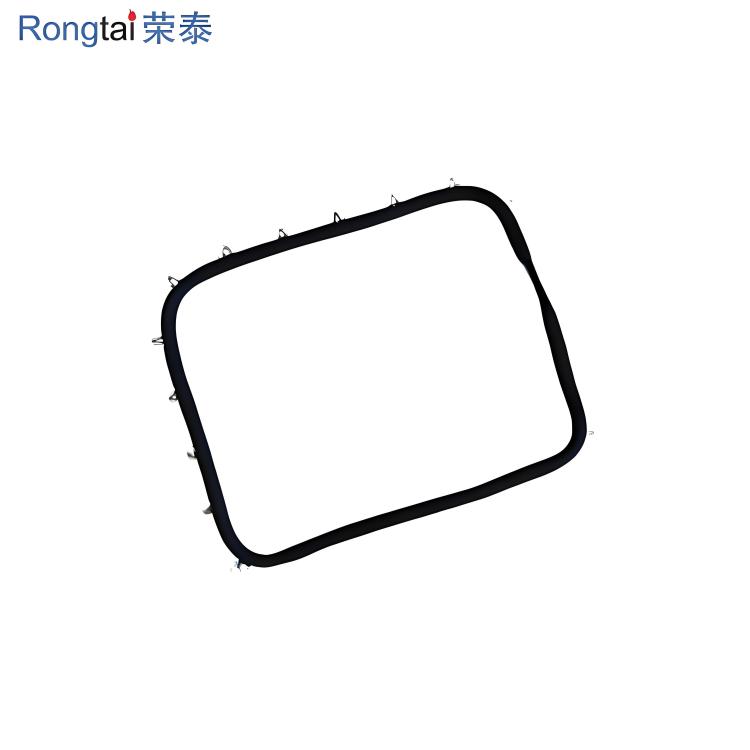
You replaced that fiberglass sealing rope three months ago. Now it's flaking apart like stale bread. Before you blame the manufacturer, take a hard look at your heat cycles. Chances are, you're killing the rope yourself.
Here are four thermal cycles that turn fiberglass sealing rope into dust long before its time.
1. The Weekend Shutdown
You fire up your oven Monday morning, run it nonstop until Friday, then kill the heat for two days. That long, slow cooldown followed by a frantic Monday morning preheat? Every cycle expands and contracts the glass fibers. After 50 of these, the binder that holds the rope together fails. The rope doesn't leak gradually – it just crumbles.
2. Rapid Quenching
Open the door and blast cold air straight onto a hot **fiberglass sealing rope**. The outer layer shrinks faster than the core. Micro-cracks appear. Next heat cycle, those cracks grow. Two dozen quench cycles later, you've got loose fibers falling into your product.
3. Over-Torque Compression
You tighten the door clamp to stop a small leak. Now the rope is compressed to half its original thickness. It can't rebound during cooldown. The fibers grind against each other. This isn't a heat cycle problem – it's a mechanical kill. But combined with heat? The rope fails in weeks.
4. Ignition Electrode Flashovers
Here's the one nobody connects. A worn ignition electrode sparking near the door frame sends high-voltage arcs into the fiberglass sealing rope. Those arcs burn local spots into hard, brittle glass. The rope holds for a while, then flakes apart at every burned point. Replace that ignition electrode first next time.
While you're at it, check your high temperature resistant connections – thermocouple leads, power wires passing through the wall. Loose connections cause erratic heating, which means wild temperature swings. More swings, more rope damage.
Stop blaming the rope. Track your cycles. Fix that ignition electrode. Tighten every high temperature resistant connection. Your next roll of fiberglass sealing rope might actually last its full life.