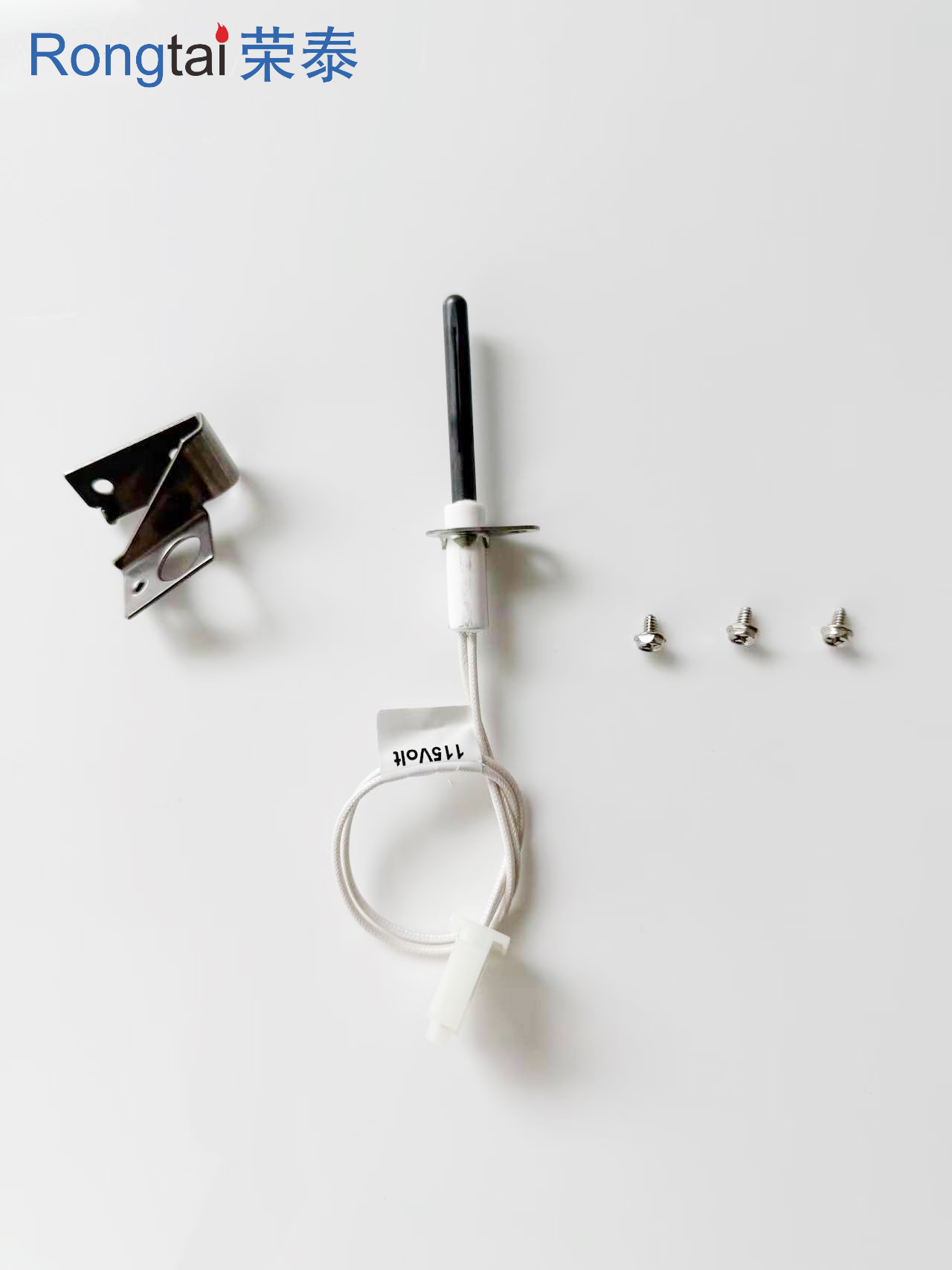
Independent laboratory testing has confirmed that the Silicon Nitride Igniter delivers more than triple the service life of traditional silicon carbide alternatives when subjected to identical thermal cycling conditions. The tests subjected both igniter types to 1,200°C surface temperatures with 60-second on-off cycles—a simulation of real-world burner operation. Silicon nitride maintained structural integrity through 45,000 cycles without measurable degradation in resistance values or heat-up time. Silicon carbide counterparts showed visible oxidation and increased electrical resistance by 27% after just 12,000 cycles.
The performance gap stems from fundamental material properties. Silicon nitride's fracture toughness—approximately 6-7 MPa·m¹/² compared to silicon carbide's 3-4 MPa·m¹/²—provides superior resistance to thermal shock. When a cold igniter is energized in a cold furnace, the rapid temperature rise creates internal stresses that cause microscopic cracks in less robust materials. Silicon nitride's inherently finer grain structure and lower thermal expansion coefficient prevent these cracks from propagating, preserving both structural integrity and electrical performance.
The Hot Surface Igniter market has responded decisively. OEMs serving the commercial heating, industrial drying, and petrochemical sectors are increasingly specifying silicon nitride as the default option. One major boiler manufacturer recently reported warranty claims related to igniter failure dropping by 82% after switching to silicon nitride—a figure that reflects both reduced field failures and improved customer satisfaction.
But the igniter itself is only part of the equation. The High Temperature Resistant Connections that interface the igniter with control systems have evolved in parallel. New termination designs incorporate ceramic fiber insulation sleeves rated for 650°C continuous exposure, protecting lead wires from radiant heat that would degrade standard PVC or silicone insulation within hours. Crimped connections are now laser-welded for gas-tight reliability, eliminating the resistance drift that has historically plagued screw-terminal assemblies in vibration-prone environments.
For plant operators, the economics are compelling. While silicon nitride igniters carry a 20-30% upfront premium, the total cost of ownership calculation favors them overwhelmingly—fewer spare parts inventories, reduced maintenance labor, and drastically lower risk of production-stopping failures.
The data is in. The verdict is clear. When extreme heat meets uncompromising reliability, silicon nitride stands alone.