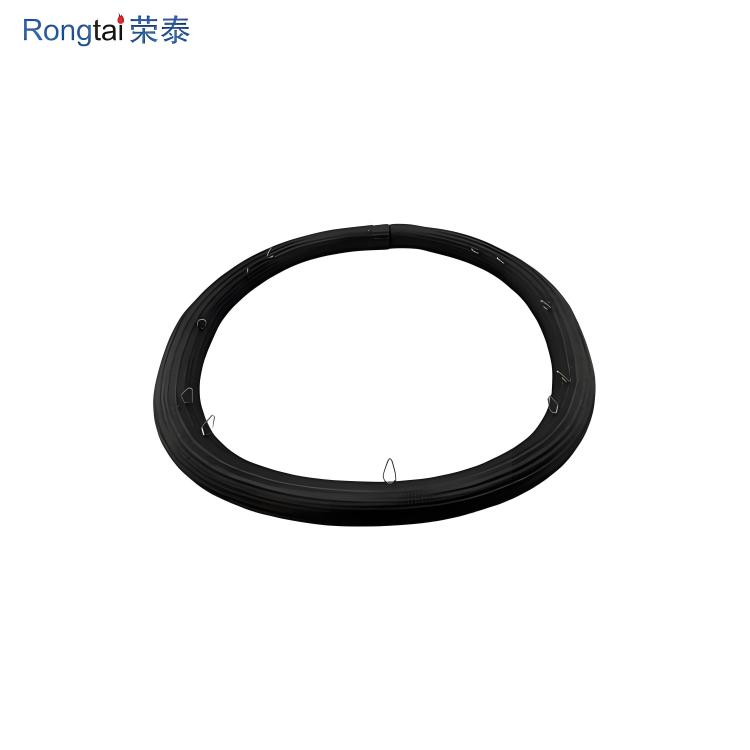
The fiberglass sealing rope around your oven door might be failing. Here are three signs it’s shot.
Sign 1: Visible Flattening or Gaps
Open the oven door. Run your finger along the fiberglass sealing rope. A new gasket is plump and springy. An old one feels flat and hard. If you can see daylight through any gap when the door is closed (turn on the oven light and look from outside in the dark), the seal is gone. Heat is escaping around the door. Your oven runs continuously trying to catch up, wasting energy and cooking unevenly.
Sign 2: Carbon Tracking or Burn Marks
Look for black, sooty lines on the fiberglass sealing rope or on the oven frame where the rope touches. Those are carbon tracks. They form when hot gases jet through a gap, burning the fibers. Once you see black marks, the rope’s insulation value is compromised. It will only get worse. The connect switch (door interlock) might still click, but the heat loss is real.
Sign 3: The Door Feels Hot to the Touch
A properly sealed oven door should be warm, not hot, on the outside. If you can’t keep your palm on the door for more than a few seconds, heat is leaking past the fiberglass sealing rope. That escaped heat can also damage nearby components. The hot surface igniter might cycle more often, and the control board can overheat. Expensive repairs start with a cheap rope.
The Fix
Replacing a fiberglass sealing rope costs about $15–30 and takes 30 minutes. Scrape out the old rope and cement, clean the groove, apply high‑temperature RTV silicone, press in the new rope, and close the door overnight. No special tools needed.
Don’t let a worn fiberglass sealing rope waste your energy and ruin your baking. Check for flattening, carbon marks, and a hot door. A $20 fix beats a $200 service call every time. Your oven will hold temperature again, and that pizza will finally brown on top.