Here are three fixes that cost nothing but time.
Fix 1: Pull the Wire Harness Away from the Igniter
Inside your oven’s control panel, the igniter (or hot surface igniter) draws high current during preheat. That current makes the igniter wires warm. If the oven lamp wire harness is bundled against those warm wires, the lamp socket bakes at 150°C instead of 100°C. Open the panel. Use a zip tie to pull the lamp wires to the cool side of the compartment. Leave an air gap of at least 2cm between lamp wires and igniter wires. Your next bulb will last months, not weeks.
Fix 2: Check the Door Switch (Connect Switch)
The oven lamp turns on when you open the door. That door switch (a connect switch) can develop high resistance over time. Instead of 120V, the lamp might see 90V. Low voltage doesn’t kill an incandescent bulb — but it does. The filament runs cooler, doesn’t vaporize properly, and deposits carbon on the glass. That carbon absorbs heat, the bulb overheats, and it pops. Replace the door switch if you measure less than 110V at the lamp socket.
Fix 3: Add a Ceramic Socket
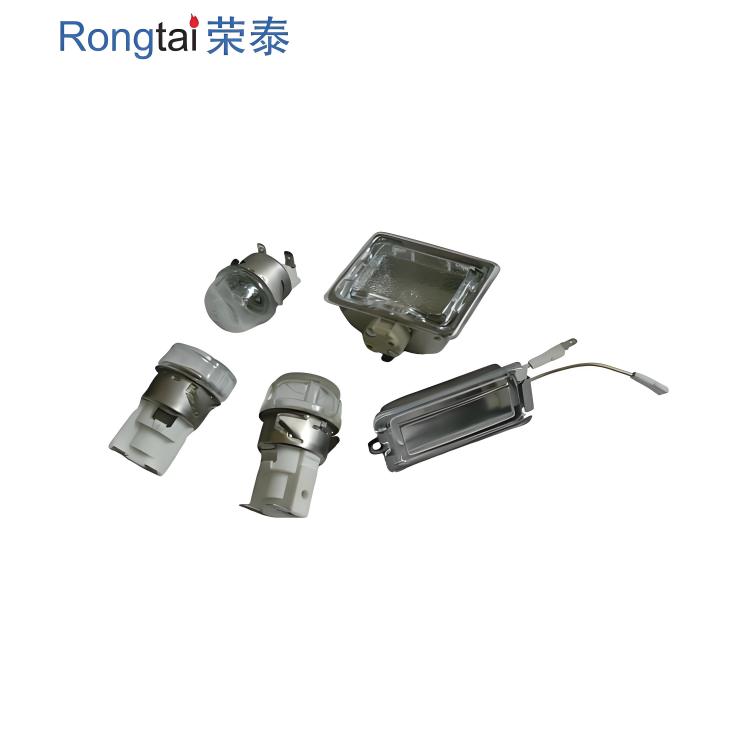
Standard oven lamp sockets are plastic or cheap porcelain. After a few self‑cleaning cycles, the socket’s center contact loses its spring tension. The bulb makes intermittent contact, arcs, and fails. Swap in a heavy‑duty ceramic socket rated for 500°C. It costs $8 and takes 10 minutes to install. The better contact keeps the bulb running cool and steady.
One More Thing
If you have a hot surface igniter that glows for more than 60 seconds before lighting, the igniter is weak. That weak igniter draws less current, confuses the control board, and can cause the oven lamp to cycle on and off rapidly. Replace the igniter first — it might cure the lamp problem too.
Your oven lamp doesn’t have to be a consumable. Fix the heat trap, check the door switch, and upgrade the socket. You’ll save money and stop cursing every time the oven goes dark mid‑roast.