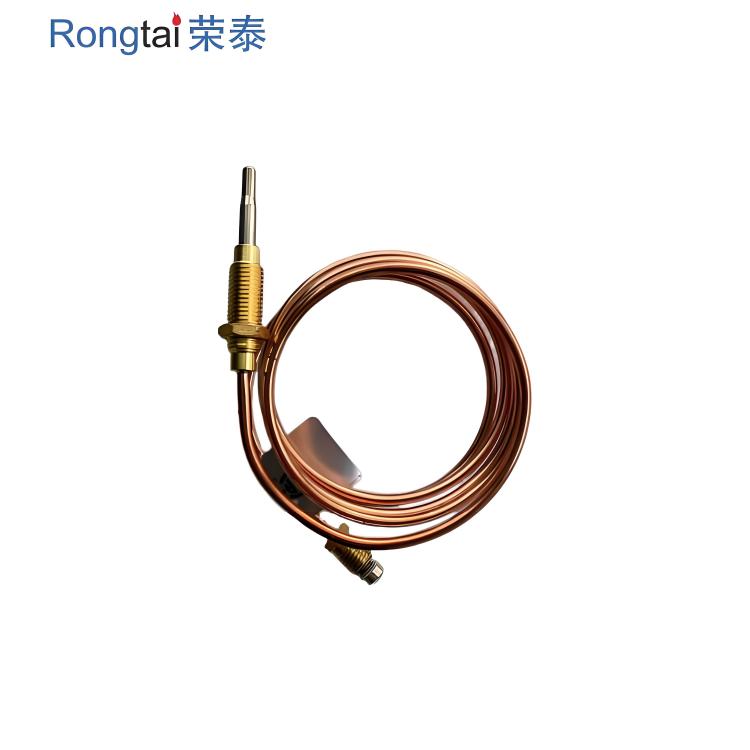
Here's how to choose the right thermocouple gas valve – and avoid the mismatch that keeps killing your pilot.
Step 1: Match the Output Voltage
Not all thermocouple produce the same millivolt signal. A standard 30mV thermocouple works with most residential gas valves. Some commercial valves need 50mV or 75mV. If you put a 30mV thermocouple on a 50mV valve, the electromagnet inside the valve won't hold. The pilot will light, but the moment you release the button, the valve closes.
Read the old valve's label. It will say "30mV" or "750mV" (millivolt systems are usually 30mV). Match that number exactly.
Step 2: Check the Thermocouple Thread Size
Thermocouple connections come in two common sizes: 1/4 inch and 1/8 inch NPT. Most residential valves use 1/4 inch. Some older or imported valves use 1/8 inch. If you try to thread a 1/4 inch thermocouple into a 1/8 inch valve, you'll strip the threads. Use a thread gauge or simply hold the old thermocouple fitting against the new one. They should look identical.
Step 3: Valve Type – Safety Shutoff or Not
A hot surface igniter system uses a different valve than a standing pilot thermocouple system. The valve for a hot surface igniter doesn't have a thermocouple connection at all. It's an electronic valve. A connect switch or a flame sensor tells the board whether to keep the valve open.
If you're replacing a valve in an old appliance with a standing pilot, you need a thermocouple-operated valve. If you have a hot surface igniter, you need an electronic valve. Mixing them won't work.
Step 4: Test Before You Buy
If your pilot lights but dies immediately, use a multimeter to measure the thermocouple output while holding the pilot button. You should see at least 25mV (for a 30mV system). If you see good voltage but the valve still won't hold, the valve's internal electromagnet is weak. Replace the valve, not the thermocouple.
Real-World Example
A restaurant oven kept losing its pilot flame. The owner replaced the thermocouple three times. Finally, a tech measured 28mV at the valve terminal – enough to hold. The valve itself had a weak magnet. A new valve fixed it permanently.
Your thermocouple gas valve must match the voltage, thread, and system type of your appliance. A mismatch will frustrate you for weeks. Measure first, match second, install third. And if the thermocouple tests good, replace the valve. Your pilot will stay lit, and you'll stop cursing every time you try to cook.