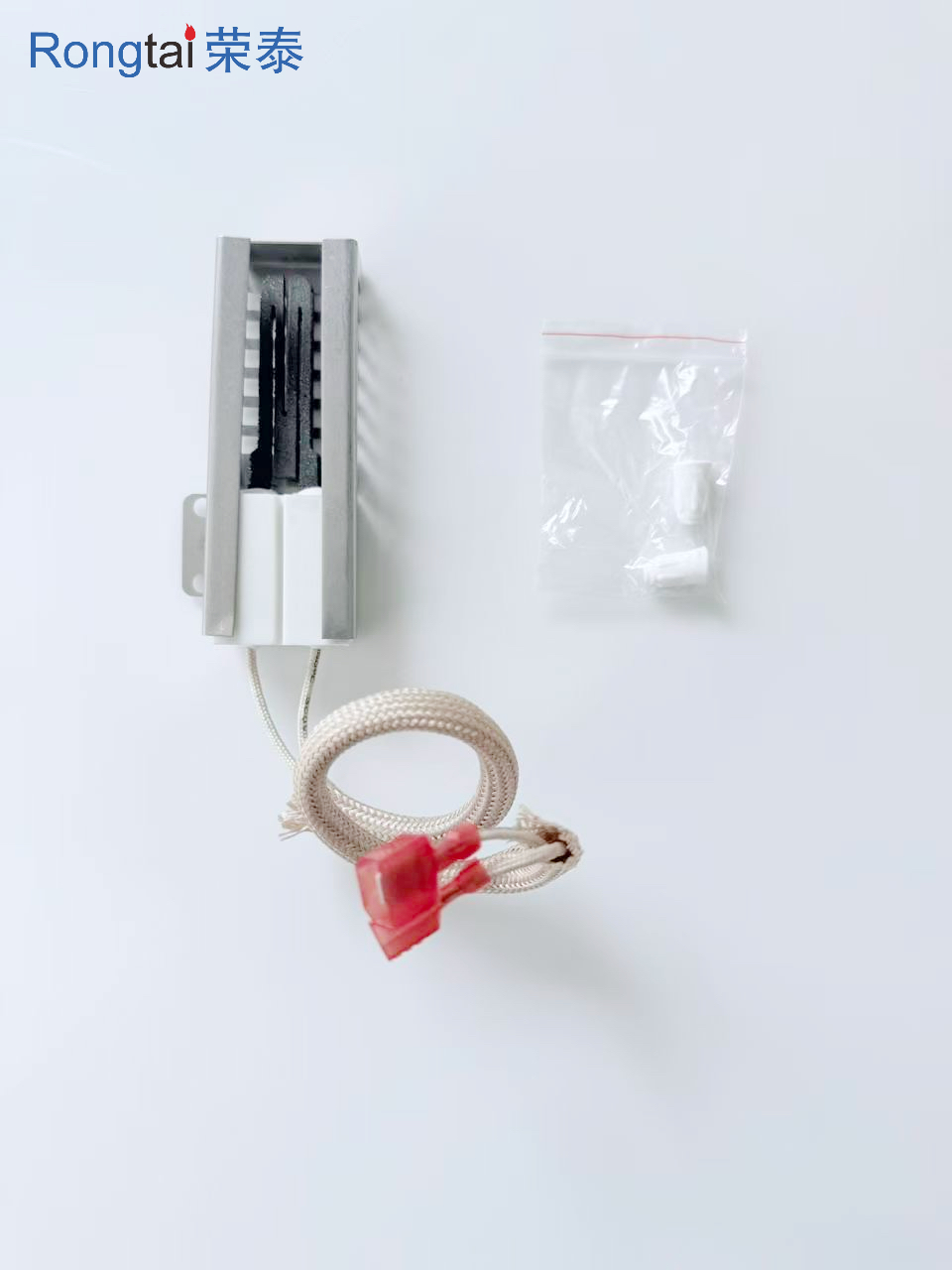
Most people replace the hot surface igniter first. Sometimes that works. Often it doesn't. The real problem is often voltage drop to the gas valve.
Here are three voltage drop checks to make before buying parts.
Check 1: Measure Voltage at the Igniter During Glow
A silicon carbide igniter needs a certain resistance to tell the control board "I'm hot enough, open the gas valve." If supply voltage is low, the igniter draws less current. The board sees that low current and never sends power to the gas valve.
Use a multimeter. Set it to AC volts. Probe the igniter terminals while the igniter is glowing. You should see 120V (or 24V depending on your system). If you see 90V, you have a loose connection or a failing transformer. Fix that before replacing the hot surface igniter.
Check 2: Measure Voltage at the Gas Valve Terminals
Once the igniter reaches temperature, the control board sends voltage to the gas valve. If that voltage is low, the valve won't open fully. You might get a small flame that immediately blows out, or no flame at all.
Probe the gas valve terminals during the ignition attempt. You should see the same voltage as the igniter (120V or 24V). If you see lower voltage, the control board itself may be faulty. A thermocouple system would be simpler, but electronic boards fail too.
Check 3: Measure Continuity of All Safety Switches
A hot surface igniter system has a series of safety switches: roll-out switches, limit switches, pressure switches. If any switch has high resistance (corroded contacts, loose wire), voltage drops across that switch. The igniter gets low voltage, glows dimmer, and the gas valve never opens.
Bypass each safety switch one at a time (with the system off). Measure resistance across each. Anything above 0.5 ohms is a problem. Clean or replace that switch.
The Thermocouple Difference
On an old standing pilot system, a thermocouple generates its own millivolts. Voltage drop there is rare because there's no control board. But on modern hot surface igniter systems, electronic boards are sensitive to any voltage loss.
One More Check
Look at the silicon carbide igniter while glowing. It should be uniformly bright orange. If one section is darker, the igniter has a hot spot and will fail soon. Replace it.
Your silicon carbide igniter can glow perfectly while the gas valve stays closed. Don't assume the igniter is bad. Check voltage at the igniter, at the valve, and across safety switches. You'll find the real problem faster and stop swapping parts that weren't broken.