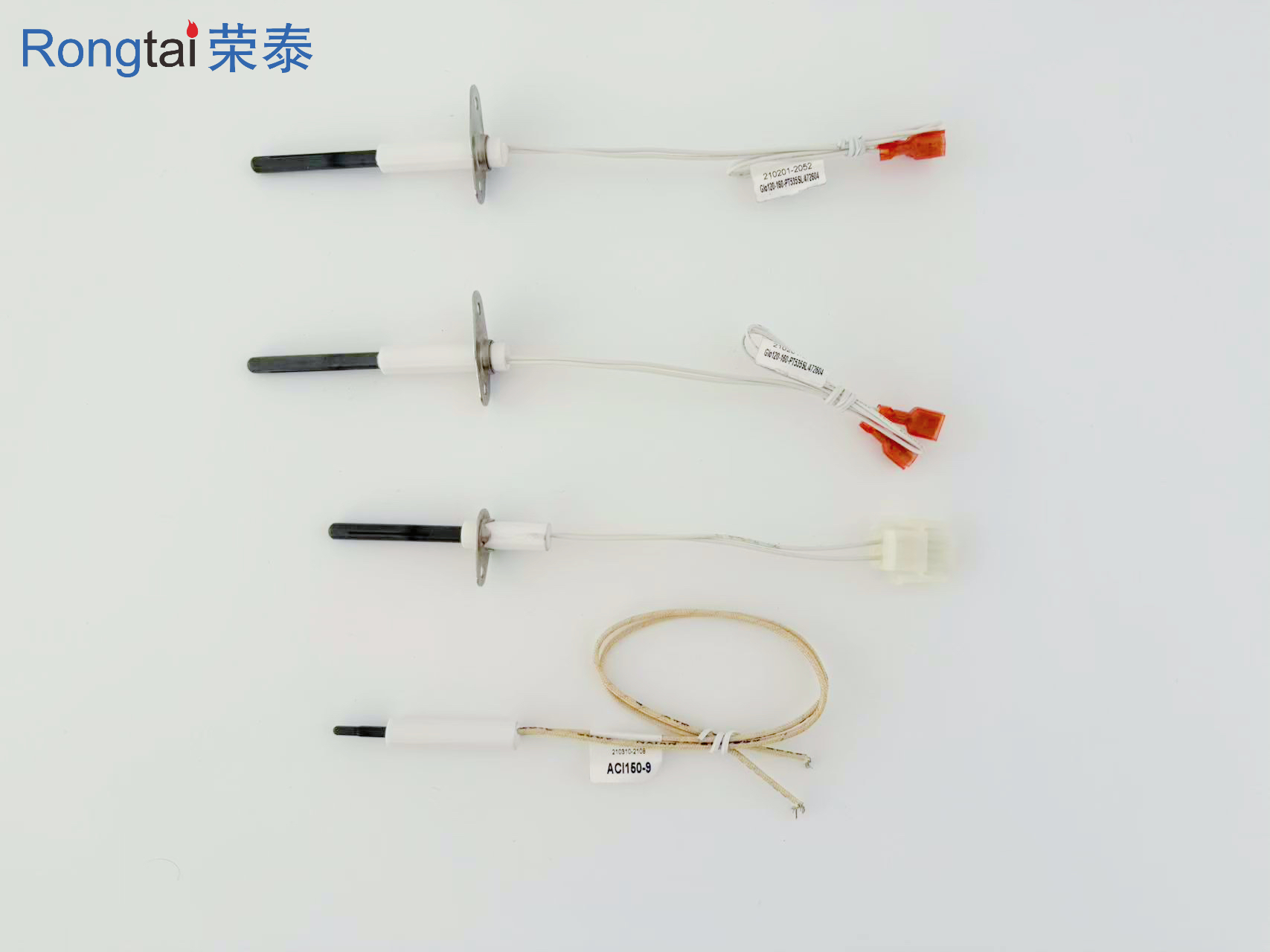
For HVAC technicians and procurement managers, the choice between a Silicon Carbide Igniter and a Silicon Nitride Igniter boils down to one question: upfront cost vs. long-term reliability. Here's the technical breakdown.
1. Silicon Carbide: The Fragile Veteran
Silicon carbide (SiC) igniters have been the industry standard for decades. They feature a rough, speckled gray surface and are common in older gas furnaces . While they offer excellent thermal conductivity and can reach ignition temperatures of over 1,800°F, they have a critical weakness: brittleness. Even careful handling during installation can cause cracks. Many no-heat calls trace back to a broken Hot Surface Igniter of this type . Typical lifespan in the field ranges from 8 to 12 years under normal cycling conditions .
2. Silicon Nitride: The Durable Upgrade
Silicon nitride (Si₃N₄) igniters are the newer, tougher alternative. They appear as smooth rods with a metallic sheen and are now standard equipment in virtually all new residential furnaces . Their key advantage is durability. They heat up faster, use less energy, and hold less heat, meaning they don't wear out as quickly . Many manufacturers offer universal Hot Surface Igniter upgrade kits that replace silicon carbide units with silicon nitride ones, boasting significantly extended service life .
3. The Mounting Caveat
While a Silicon Nitride Igniter may outlast its SiC counterpart, it's not a plug-and-play upgrade. Silicon carbide igniters generally have a larger surface area than their nitride replacements. If a nitride igniter is not mounted in precisely the right position, the burner may not ignite properly, leading to delayed ignition and system safety hazards .
For longevity, Silicon Nitride Igniter technology wins hands down. However, careful attention to mounting is essential. If you're replacing a failed unit, verify fitment carefully—a poorly positioned nitride igniter can create problems that outweigh its durability benefits.