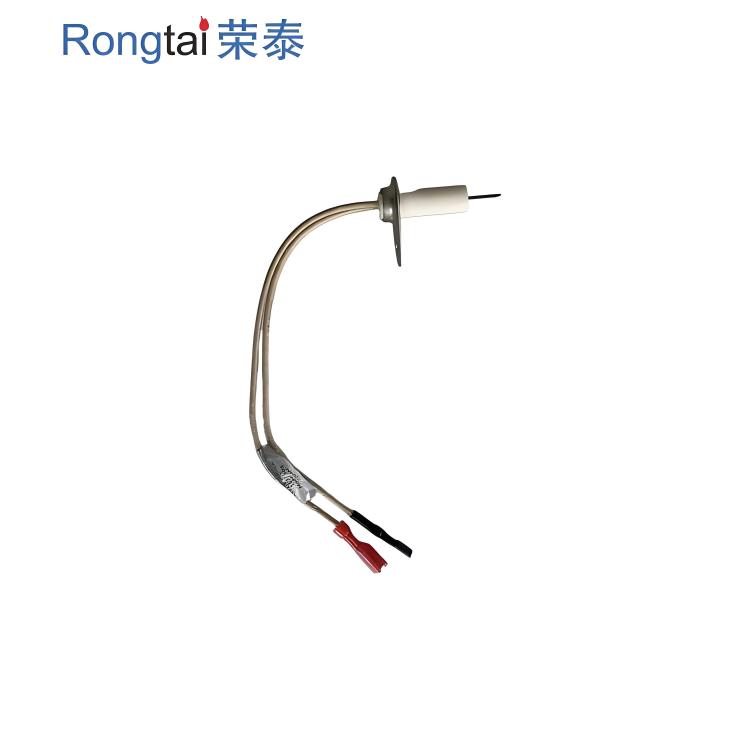
Voltage is the most critical and the most frequently overlooked specification. The vast majority of residential and light-commercial water heaters operate on 120V AC. However, certain commercial units and some European-manufactured appliances run on 240V AC or 24V DC. Installing a 120V igniter into a 240V circuit will destroy the ceramic element instantly, often spectacularly. Conversely, a 240V igniter on a 120V circuit will glow dimly, never reaching ignition temperature, and the water heater will cycle through failed start attempts until it locks out. The voltage is almost always printed on the old igniter's base or stamped on the ceramic body. If that label has worn off, consulting the water heater's wiring diagram is the only safe fallback.
Lead length determines installation reach. Common lengths range from 12 inches to 19 inches, and replacing a 12-inch lead with a 19-inch option might seem harmless—excess wiring can simply be tucked away. In practice, the extra wire inside the burner compartment can contact hot surfaces, chafe against sharp sheet metal edges, or interfere with the gas valve's operation. The reverse problem, a lead that is too short, forces a suboptimal mounting angle that places the igniter tip outside the optimal flame path. That causes delayed ignition, flame rollout, and soot accumulation.
Tip style is the third variable. Most modern water heaters use a flat-tip igniter with a loop or paddle configuration. Older models sometimes use a round-tip igniter, and some commercial units use a multi-finger design. Tip geometry affects flame sensing. The silicon nitride igniter typically uses a flat-tip design that pairs reliably with electronic ignition controls. A mismatched tip will not sense flame properly, causing the system to repeatedly spark.
Professionals recognize that although a thermocouple is less common in modern hot surface ignition systems, older hybrid configurations may still rely on a separate thermocouple to ensure the gas valve remains open during operation. For cross-referencing, the thermocouple remains a distinct component not replaced by the igniter itself.
The consequences of a mismatch extend beyond the immediate service call. An improperly installed hot surface igniter fails prematurely, sometimes within weeks, leading to a frustrated customer and a second unpaid service visit. Cross-referencing is simple: read the old part, know the unit's voltage, match the lead length, and verify the tip shape. When the replacement is a direct match for the specification, the water heater fires cleanly on the first attempt, and the technician moves on to the next call without looking back.