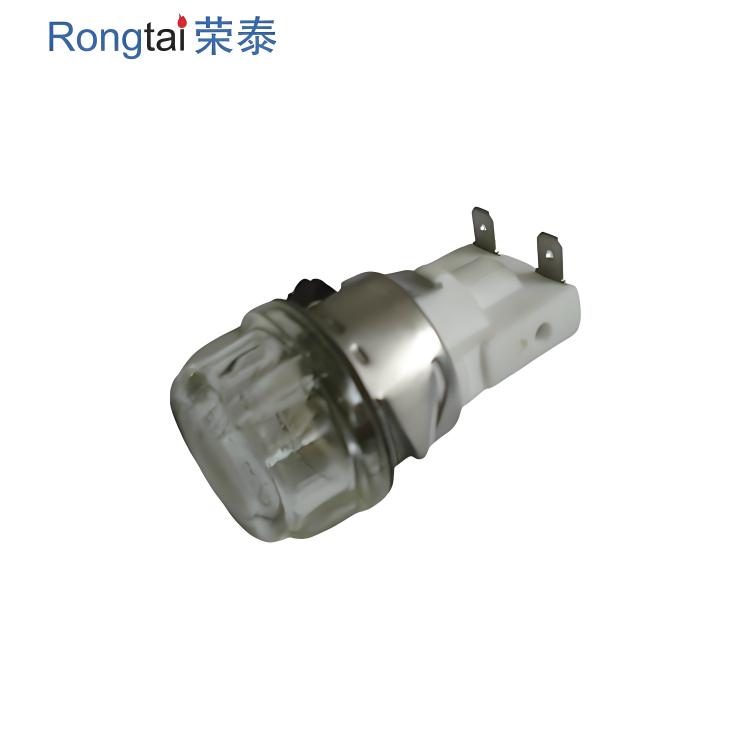
The oven lamp is one of those components that most people never think about — until it stops working. But beneath the simple act of illuminating an oven cavity lies a sophisticated ecosystem of electrical and thermal engineering. And the oven lamp does not operate in isolation. It shares its circuit with two other critical components: the connect switch and the hot surface igniter. Together, they form the electrical nervous system of modern cooking appliances, from home kitchens to commercial ranges.
The connect switch is the component that regulates current flow to the oven lamp. Every time the oven door opens or the user turns a knob, the connect switch toggles, sending power to the lamp. But this seemingly simple function carries a hidden cost. The igniter — whether a glow bar or spark module — draws high current during preheat. That current flows through the same connect switch that sits near the lamp wiring. Every time the igniter cycles on and off, the connect switch terminals heat up and cool down. Over time, this thermal cycling degrades the switch contacts. Arcing at the contacts generates additional heat, leading to intermittent or permanent failure. A faulty switch may leave the lamp in a semi-on state, accelerating filament degradation. In residential ovens, this means a bulb that burns out prematurely. In commercial kitchens — where ovens cycle dozens of times per day — the connect switch becomes a consumable component.
The hot surface igniter is the third player in this system. In gas ovens, the hot surface igniter replaces outdated pilot lights. Silicon nitride ceramic elements heat to over 1,200°F within seconds, igniting burners instantly. The global hot surface igniters market was valued at US$244 million in 2024 and is forecast to reach US$393 million by 2031, growing at a CAGR of 7.1%. Silicon nitride igniters account for 65% of the market, with silicon carbide making up the remaining 35%. The product is primarily used in gas heating systems and ovens, with ovens representing 28% of total application share.
What ties these components together is the circuit they share. In a typical gas oven, turning on the oven sends electricity to the igniter, causing it to heat red-hot. The connect switch routes power to the lamp. A weak igniter draws less current, confuses the control board, and can cause the oven lamp to cycle on and off rapidly. The components are interdependent. A failing igniter can destroy a lamp. A degraded connect switch can prevent ignition.
The commercial kitchen magnifies these dynamics. Convection ovens in restaurants cycle constantly. Hot surface igniters in commercial environments must withstand nearly 2,500°F. Connect switches are subjected to hundreds of toggles per service day. Oven lamps must remain operational through it all. Manufacturers now offer commercial-grade hot surface igniters with high-temperature silicon carbide heating elements and robust ceramic bases designed for continuous operation. These components are compatible with major commercial range brands including Southbend, with specific model series such as BGS/12SC, BGS/22SC, CG/12SC, and CG/22SC.
The lesson is simple. The oven lamp is not an isolated part. It is one node in a circuit shared with the connect switch and the hot surface igniter. Understanding that interdependence — in residential kitchens and commercial ranges alike — is the first step toward building appliances that last.