Every engineer responsible for industrial gas-fired ovens, boilers, or commercial fryers knows the frustration of a failed ignition cycle. Traditional metallic coil igniters—typically made from Kanthal or similar iron-chromium-aluminium alloys—work well enough in low-cycle residential furnaces. But push them into high-temperature, rapid-cycling environments, and they start showing their limits: oxidation, warping, and eventual fracture after a few thousand cycles.
Recent lab tests conducted at an independent combustion research facility put that assumption to the test. A standard metallic coil Hot Surface Igniter was run head‑to‑head against a Silicon Carbide Igniter under identical conditions: 1,250°C surface temperature, 10 seconds on, 90 seconds off, repeated continuously. The metallic coil began losing structural integrity at around 4,500 cycles, with visible cracking and a 15% rise in resistance. The silicon carbide unit? It sailed past 12,000 cycles without measurable degradation. Even after 15,000 cycles, its resistance remained within spec, and the ignition time stayed under 3.5 seconds.
What makes the difference? Silicon carbide's covalent bonding structure gives it exceptional resistance to thermal shock and oxidation. Unlike metallic coils that form brittle oxide scales at high temperatures—scales that spall off and accelerate failure—silicon carbide develops a protective silica layer that actually seals the surface. That self‑healing characteristic extends service life by three to five times in high‑cycle applications, from commercial baking ovens to paint‑curing lines.
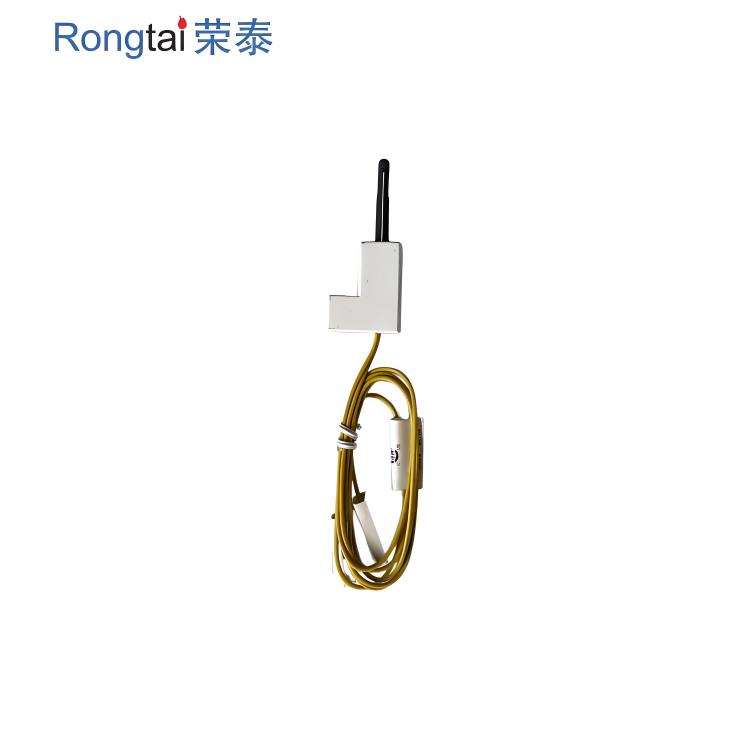
Precise temperature feedback is essential in these systems. A Thermocouple—typically Type K or N—is often placed within 2 mm of the igniter tip to provide closed‑loop control. In the test setup, thermocouple readings allowed the control board to modulate power delivery, keeping the silicon carbide element within a ±5°C window. The metallic coil, by contrast, showed wider temperature swings due to its changing resistance profile, which forced the controller to overcompensate and ultimately stressed the power supply.
For OEMs designing modulating boilers or retrofitting existing equipment, the choice is increasingly clear. The silicon carbide igniter commands a slightly higher upfront cost, but the reduction in unplanned service calls—and the avoided downtime on a production line that loses $5,000 per hour—makes that premium disappear within months. It's not about replacing every coil today. But for applications that cycle hard and run hot, silicon carbide has earned its place as the new baseline. The thermocouple will keep measuring; the silicon carbide will keep firing. And the maintenance team? They'll finally get some sleep.