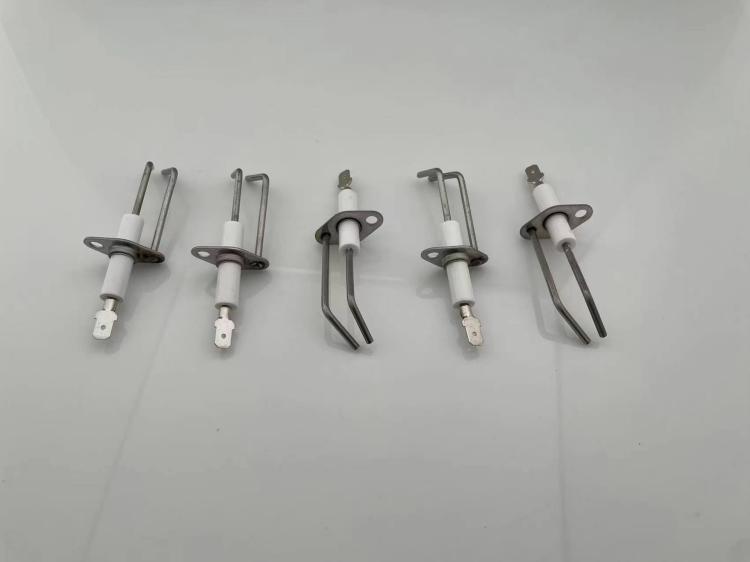
Metal ignition electrodes look tough. They are usually nickel-alloy or stainless steel. But your grill is not a gentle place. It is grease, moisture, and 600°F heat all at once. That metal tip oxidizes quickly. Each time you spark, a tiny arc jumps across, and that arc eats away at the surface. Within months, a crust of carbon and rust builds up. The spark gets lazy—yellow instead of blue, weak instead of snapping. Eventually, it cannot bridge the gap to the burner at all.
Ceramic electrodes take a completely different approach. The metal conductor is wrapped inside a high-alumina ceramic sleeve. That ceramic does not conduct electricity, but it does one thing brilliantly: it shields the metal from direct heat and corrosive fumes. The tip stays clean because the ceramic glaze resists grease adhesion. So the spark remains hot, sharp, and consistent. After two years of heavy use, a ceramic Ignition Electrode still throws a blue arc as crisp as day one. The metal one? It is already in the trash.
But the electrode does not work alone. Think about the Connect Switch—that little push-button or rotary knob you press to fire the ignitor. When a metal electrode builds up resistance due to corrosion, the switch has to push more current through a weakened circuit. That extra load heats up the switch contacts, sometimes welding them shut or burning them out. With a ceramic electrode, the circuit resistance stays low and stable. The Connect Switch lives a longer, happier life because it never has to overcompensate for a faulty spark.
Then there is the Thermocouple. This little safety device sits right next to the burner flame. Its job is to sense heat and keep the gas valve open. If the Thermocouple does not feel a hot flame within a few seconds, it shuts the gas off to prevent a leak. Here is the catch: a weak, intermittent spark from a degraded metal electrode often fails to ignite the gas on the first or second click. By the time you finally get a flame, the Thermocouple has already killed the gas supply twice. You end up resetting the valve, waiting, and trying again. Ceramic electrodes give you a reliable first-click ignition. That means the Thermocouple sees a stable flame immediately, the valve stays open, and your steak does not turn into a cold disaster.
So yes, a ceramic Ignition Electrode costs a couple of bucks more than a metal one. But when you factor in the time saved, the reduced wear on your Connect Switch, and the peace of mind that your Thermocouple is not constantly tripping, the math is obvious. Metal sparks for a season. Ceramic sparks for a decade. That is not marketing—that is materials science.